Water Heaters
Why Does My Water Smell Like Rotten Eggs?
Published November 9, 2026 · By the PlumbCove team
Few household smells are as unmistakable — or as unsettling — as rotten eggs coming out of a faucet. The good news is that the classic cause is well understood and usually fixable: sulfur-related bacteria growing in warm water, most often inside a water heater, producing hydrogen sulfide gas in amounts tiny enough to be harmless but plenty strong enough to smell. The important first step is locating the smell, because a drain problem, a water heater problem, and a supply problem each have a completely different fix.
This guide starts with the simple glass test that separates those possibilities in two minutes, then walks through the water heater anode rod behind most hot-water-only cases, how South Florida's municipal supplies and the occasional well fit in, and where water filtration genuinely helps — and where it cannot.
First Test: Is It the Water or the Drain?
Fill a glass from the tap that smells worst, walk it to another room, and sniff it there. If the water in the glass smells clean away from the sink, the smell is not in your water — it is in the drain or the fixture itself, where bacteria growing in the gunk inside a drain, an overflow channel, or a disposal produce the same rotten-egg odor. Cleaning the drain and overflow, or running the disposal clean, is then the fix, and no water treatment will change anything.
If the glass still smells in the other room, the odor really is in the water, and the next question splits the problem in two. Run the cold tap separately from the hot. A smell on the hot side only points squarely at the water heater — the most common pattern by far. A smell on both hot and cold suggests the source is further upstream: the supply, a softener or filter that has gone stale, or — on well systems — sulfur in the groundwater itself.
- ▸Glass smells clean in another room: the drain or fixture is the source
- ▸Hot water only: suspect the water heater first
- ▸Both hot and cold: look upstream — supply, softener, filter, or well
- ▸Note which taps smell; a single bathroom often means a local fixture issue
The Water Heater Is the Usual Suspect
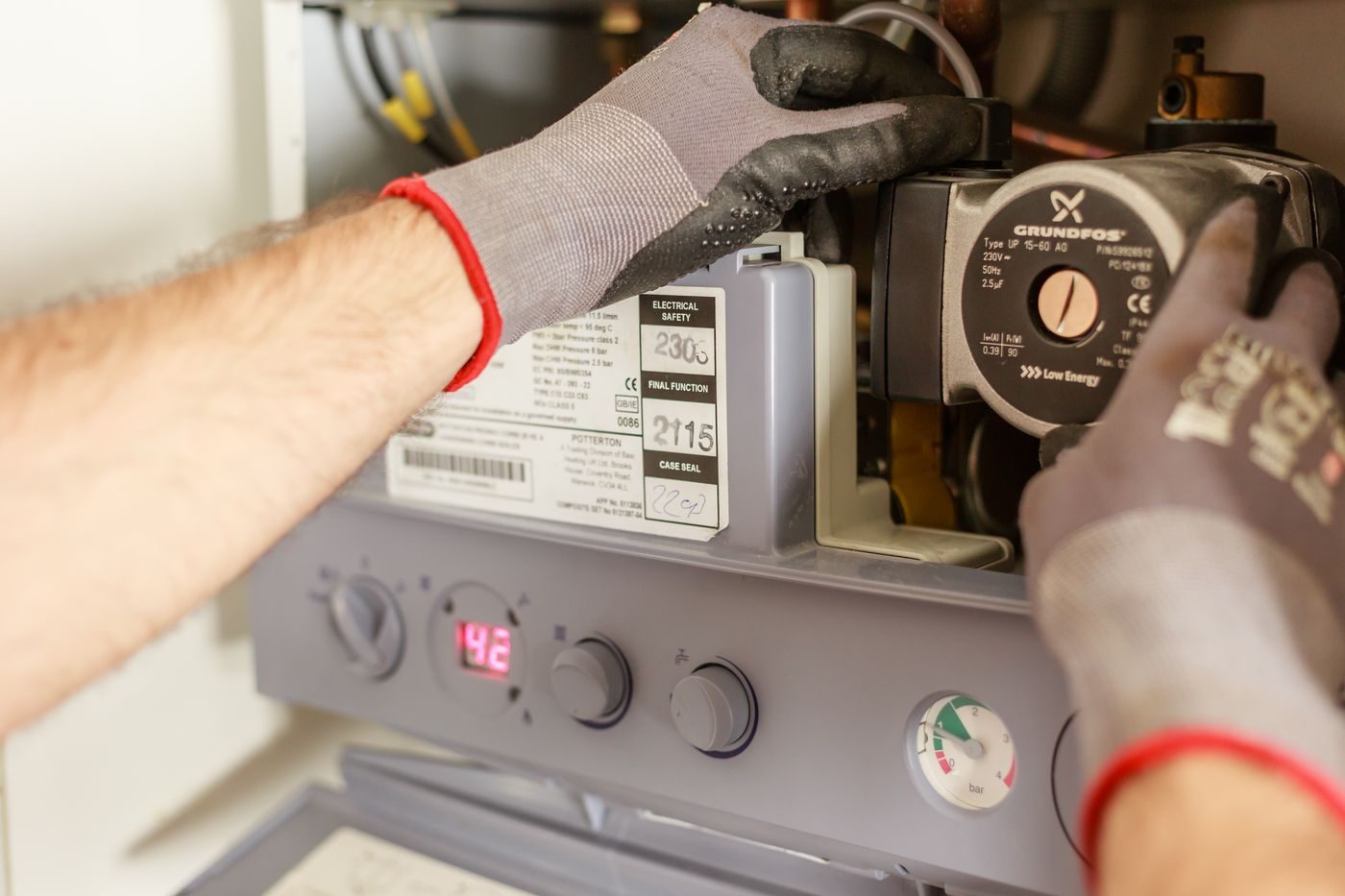
Inside every tank water heater is a sacrificial anode rod — a metal rod designed to corrode in place of the tank. As the rod reacts with naturally occurring elements in the water, and as harmless sulfur bacteria colonize the warm tank environment, hydrogen sulfide can form and dissolve into the hot water, announcing itself the moment you open a hot tap. The smell is typically strongest after the water has sat — first shower of the morning, or a house that has been empty for a few days — because the gas builds up in the tank.
The standard fixes follow the diagnosis. Flushing the tank and disinfecting it can knock the bacteria back; replacing a spent anode rod with one made of a different alloy often reduces the reaction that feeds the smell; and raising the thermostat briefly to a bacteria-killing temperature is a technician's move, done carefully, because scalding risk rises with tank temperature. If the rod is fully consumed, the conversation widens — the tank itself has been unprotected, and its age becomes part of the decision.
Municipal Water, Wells, and Sulfur in South Florida
Most homes in Miami-Dade and Broward drink treated municipal water, and treatment keeps sulfur at the plant from reaching your tap — which is why a sudden rotten-egg smell in a city-water home so rarely traces to the supply. If both hot and cold smell and neighbors report the same thing at the same time, that is the exception worth a call to the utility: a temporary treatment change or flushing work in the lines can push odors into an area for a short stretch.
Private wells — more common at the western edges of the counties and in pockets of Southwest Ranches, Davie, and unincorporated areas — are a different story. Groundwater in Florida's limestone aquifer can carry natural sulfur, and a well home may live with the smell in both hot and cold water year-round until treatment addresses it. A stale water softener or an old whole-house filter cartridge can also breed odor-causing bacteria on either supply, which is why checking and servicing existing treatment equipment comes before buying anything new.
What Water Filtration Can and Cannot Do
Filtration helps when the odor is actually in the incoming water. Carbon filtration is effective on the low-level hydrogen sulfide typical of treated supplies, and well-water sulfur at higher levels usually calls for more specialized treatment such as oxidation-based systems. This is precisely the assessment our Water Filtration page is built around: identify the source first, then match the treatment to it, sized for the house rather than sold off a shelf.
What filtration cannot do is fix a smell that never enters through the supply. A whole-house system will not stop a water heater from growing sulfur bacteria — the bacteria live downstream of the filter, inside the tank — and it will not clean a smelly drain. Anyone who quotes you a filtration system without first asking whether the smell is hot-only or in a glass away from the sink is skipping the diagnosis. Source first, equipment second: that order is what separates a fix from an expensive coincidence.
One Smell That Is an Emergency, Not a Nuisance
There is one rotten-egg scenario that is not a water-quality issue at all. Natural gas is odorized with a chemical that smells like rotten eggs precisely so leaks get noticed. If the smell is strong in the air of a room — especially near a gas appliance, a gas water heater, or a stove — rather than coming specifically out of your water, treat it as a possible gas leak: leave the house, do not operate switches or appliances, and call your gas utility or 911 from outside. Ordinary sulfur odor in water is a quality problem; suspected gas is a safety problem, and the two should never be confused or waited out.
For the everyday water version, PlumbCove connects South Florida homeowners with independent local plumbing providers through our Water Filtration page. Request a local pro there, or call 786-741-7667, and describe what the glass test showed — hot only, both sides, one tap or the whole house. That one detail routes you to the right fix the first time. You hire the provider directly — we simply make the connection.
Rather have a pro look at it?
If the checks above point past the safe DIY line, request a local pro for Water Filtration — or call 786-741-7667. One request, independent local providers, you choose who to hire.