Water Heaters

Water Heater Flushing: Why Florida Sediment Builds Up Fast

Published November 1, 2026 · By the PlumbCove team
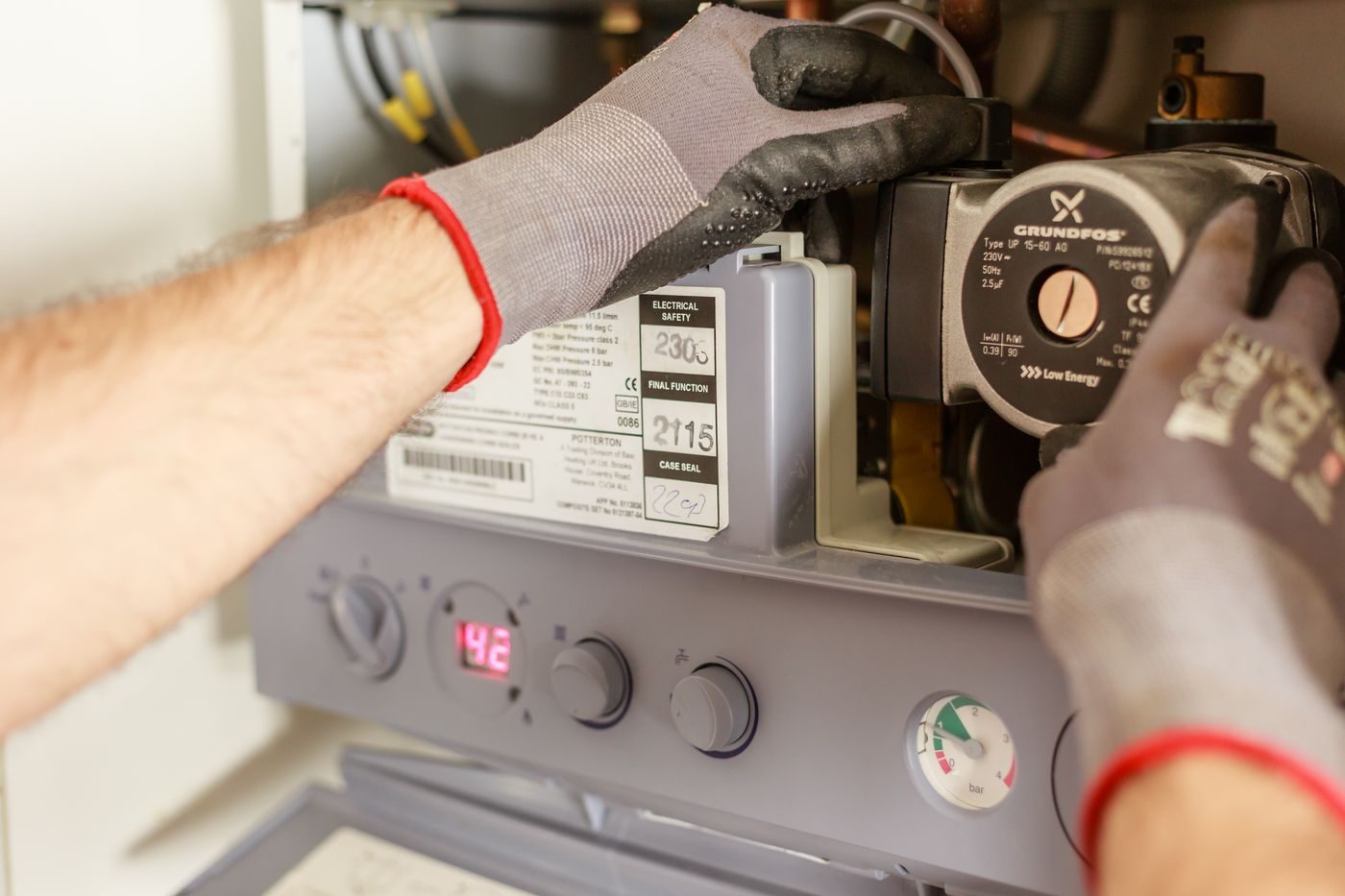
Hands adjusting the controls on a water heater

South Florida's water arrives with a mineral load, and every gallon your water heater heats leaves a little of it behind. The minerals settle, bake onto the tank bottom, and build into a layer that insulates the water from the heat source, makes the tank rumble and pop, and shortens the heater's life. In harder-water parts of Miami-Dade and Broward, that layer builds faster than national maintenance advice assumes.

This guide explains what sediment is doing inside the tank, the symptoms in the order you will notice them, how often a Florida tank should be flushed, and what a proper flush involves — including the honest limits of flushing a tank that has been neglected for years.

What Sediment Is and Why Florida Builds It Quickly

Municipal water in South Florida is drawn largely from limestone aquifers, and it carries dissolved calcium and magnesium — the 'hardness' that spots glassware and scales showerheads. Heat is what turns dissolved minerals into solid sediment: inside a tank held at 120–140 degrees around the clock, minerals precipitate out of every heated gallon and settle to the bottom, where the burner or lower element bakes them into an increasingly solid layer.

Volume compounds it. A household that runs laundry, showers, and a dishwasher daily pushes thousands of gallons a month through the tank, each contributing its minerals. That is why two identical heaters age differently on different streets — the mineral content of the local supply and the household's hot-water use set the pace, and much of South Florida is on the fast end of both.

The Symptoms, in the Order You Will Notice Them

First comes sound: rumbling, popping, or crackling during heating cycles, as water trapped under the sediment layer boils and escapes through it. Homeowners describe it as popcorn or gravel in the tank, and it is the most reliable early warning there is. Next comes performance: hot water that runs out faster than it used to, because the sediment has displaced gallons of storage and insulates the rest, and water that takes longer to recover between showers.

Later signs include cloudy or rusty-looking hot water from a deteriorating anode rod and tank interior, grit in faucet aerators, and a rising gas or electric bill for the same household routine. By the time a tank is leaking, sediment is no longer the conversation — but years of it are often in the tank's history, because an insulated burner runs longer and hotter, stressing the tank steel and glass lining on every cycle.

How Often Should a Florida Tank Be Flushed?

Once a year is the working answer for most South Florida homes, and every six months is reasonable where the water is noticeably hard, the household is large, or the tank has a history of sediment noise returning quickly. Manufacturers recommend annual draining and flushing; the honest local adjustment is that Florida's mineral content and year-round use put most homes at the diligent end of that advice rather than the 'eventually' end.

Pair the flush with the rest of the short tank checklist: test the temperature-and-pressure relief valve, look at the anode rod every few years (it sacrifices itself to protect the tank, and Florida water consumes it steadily), and check the drain valve and supply connections for the slow drips that announce themselves as corrosion later. A flush visit that includes those checks is the maintenance that actually extends tank life.

What a Proper Flush Actually Involves

A real flush is more than opening the drain for a minute. The power or gas is shut off, the cold supply is used to stir and push sediment out through a hose while the tank drains, and the process repeats until the discharge runs clear — heavily loaded tanks need several fill-and-drain cycles. The drain valve itself is part of the story: cheap plastic valves clog with the very sediment you are removing, which is why a badly neglected tank sometimes cannot be flushed effectively at all.

Handy homeowners do flush their own tanks, and the cautions are real: tank water is hot enough to scald, the power must be off before the tank drains (a dry-fired element burns out in seconds), and the tank must be completely full with air purged before power returns. If the drain valve has not moved in a decade, forcing it is how a maintenance task becomes a flood — that tank belongs to a plumber.

The Honest Limit: Flushing Maintains, It Does Not Resurrect

Flushing a tank that has baked a decade of sediment into a solid floor removes what is loose; it does not restore the displaced capacity fully or undo the stress already done, and a tank that rumbles again within weeks of a thorough flush is telling you the layer — or the tank — is near the end of the conversation. Weigh the heater's age honestly: a tank past ten years with heavy sediment symptoms is usually a replacement discussion with maintenance on the new unit from day one, not an annual rescue program for the old one.

PlumbCove connects South Florida homeowners with independent local plumbing providers for water heater repair and replacement. Request a local pro through our water heater repair & replacement page, or call 786-741-7667. You hire the provider directly — we simply make the connection.

Rather have a pro look at it?

If the checks above point past the safe DIY line, request a local pro for Water Heater Repair & Replacement — or call 786-741-7667. One request, independent local providers, you choose who to hire.
Request a Local Pro

Tell us what's going on. We'll share your request with independent local plumbing providers who can contact you about it.

A photo of the unit, the label plate, or the problem helps a pro come prepared. Max 5 MB.

By submitting, you agree that PlumbCove may share this request with one or more independent local service providers so they can contact you about your service request by phone, text, or email. PlumbCove is a matching service, not the service provider, and may receive compensation for referrals. Message/data rates may apply. Reply STOP to opt out of texts.

How PlumbCove works: PlumbCove is a free matching service. We connect South Florida homeowners with independent local plumbing providers. Providers are independent businesses — not our employees — and we may receive compensation for referrals. You choose who to hire, and your agreement is directly with the provider.

Quick answers

Why does my water heater rumble and pop?

Sediment baked onto the tank bottom. Water trapped beneath the mineral layer boils and pops through it as the tank heats. It is the classic sign the tank needs flushing — and that the burner or elements are working through insulation, which wastes energy and stresses the tank.

How often should you flush a water heater in Florida?

About once a year for most South Florida homes, and every six months where water is very hard, the household uses a lot of hot water, or sediment noise returns quickly. Florida's limestone-aquifer water builds sediment faster than national averages assume.

Can flushing fix a water heater that runs out of hot water fast?

If sediment is the cause — displacing storage and insulating the water from the heat — a thorough flush can restore much of the capacity. If the tank is old and the layer has hardened over years, flushing helps less, and short hot water may point to a failing element, dip tube, or the tank's age itself.

How do I get matched with a local provider for water heater service?

Use the Request a Local Pro form on our water heater repair & replacement page or call 786-741-7667. PlumbCove shares your request with independent local plumbing providers in Miami-Dade and Broward who can contact you about the work. You hire the provider you choose directly.

More guides

Street manhole cover over a sewer line

Drains & Sewers

Clogged Drain in Miami: What a Plumber Does That a Plunger Can't

A plunger handles a shallow clog. When the clog is grease ten feet down, roots in the main line, or cast iron rotting under a Miami slab, a plumber brings tools — and a camera — that work on a different level.

Old pipe joint leaking water

Leaks & Water Damage

Leak Detection in South Florida: Signs There's a Hidden Leak

Hidden leaks rarely announce themselves with a drip you can see. They show up as a water bill that doubled, a warm patch of tile, a meter that moves at midnight. Here are the signs — and how detection actually works.

Hands adjusting the controls on a water heater

Water Heaters

Water Heater Replacement in Fort Lauderdale: Costs and Choices

There is no single price for a water heater in Fort Lauderdale — there is a range, and it moves with tank size, fuel, code upgrades, and whether you go tankless. Here is the honest breakdown.

Street manhole cover over a sewer line

Drains & Sewers

How Much Does a Plumber Cost in Miami? An Honest Breakdown

There is no single plumber price in Miami — there are three pricing models, a service call fee, and a set of local factors (cast iron, condos, permits) that move the number. Here is how the money actually works.

Street manhole cover over a sewer line

Drains & Sewers

Sewer Line Repair in Miami: Warning Signs and Your Options

A failing sewer line whispers before it shouts: every drain slow at once, a gurgle in the toilet, a mysteriously green patch of lawn. In Miami's cast iron neighborhoods, those whispers deserve a camera — here's what to watch for and what your options are.

Hands adjusting the controls on a water heater

Water Heaters

Tank vs. Tankless Water Heaters: Which Fits a Fort Lauderdale Home?

Tank stores hot water; tankless makes it on demand. In Fort Lauderdale the right answer turns on your busiest hour, Broward's hard water, and how long you'll stay in the home — not on which unit a salesperson prefers.

Street manhole cover over a sewer line

Drains & Sewers

Slow Drains in Every Sink? It Might Not Be a Simple Clog

One slow drain is a clog. Every drain slowing at once is a message from further down the line. Here is how to read the pattern in a South Florida home — and why plunging harder will not fix it.

Hands adjusting the controls on a water heater

Water Heaters

No Hot Water: 5 Checks Before You Call Anyone

A cold shower does not always mean a dead water heater. Five checks — most take under ten minutes total — separate a simple reset from a real failure, and tell you exactly what to report if you do call.

Street manhole cover over a sewer line

Drains & Sewers

Garbage Disposal Jammed, Leaking, or Dead: A Troubleshooting Guide

Most disposal failures are one of four problems, and two of them are safe five-minute checks. Work through them in order — power off, hands out — and know exactly when the fix stops being yours.

Old pipe joint leaking water

Leaks & Water Damage

Slab Leaks Explained: The Florida Problem Hiding Under Your Floor

Much of South Florida is built slab-on-grade, with water lines running under the concrete. When one leaks, the signs are subtle and the water bill is not. Here is how slab leaks show themselves and how pros find them without tearing up the whole floor.

Old pipe joint leaking water

Leaks & Water Damage

Running Toilet, Dripping Faucet: Small Leaks, Real Money

A toilet that refills itself and a faucet that drips all night are not quirks — they are metered water leaving your house around the clock. Here is what they cost, what causes them, and where the DIY line sits.

Street manhole cover over a sewer line

Drains & Sewers

Cast Iron Pipes in Older Miami Homes: What Homeowners Should Know

If your Miami home was built before the late 1970s, its drain lines are probably cast iron — and cast iron in South Florida soil has a lifespan that many of those homes have now reached. Here is how it fails, how to spot it early, and how the repair decisions actually get made.

Street manhole cover over a sewer line

Drains & Sewers

Sewer Smell in the House: Causes That Aren't Your Imagination

It comes and goes. It is worse on some days, in some rooms, and guests notice it before you do. A sewer smell indoors is not a housekeeping failure and it is not your imagination — it is sewer gas taking a path it should never have, and each path has a specific cause and fix.

Old pipe joint leaking water

Leaks & Water Damage

Repiping a House in South Florida: Costs, Timeline, What to Expect

Repiping sounds like the biggest plumbing job a house can get — because it is. But for older South Florida homes with corroding galvanized or failing cast iron-era plumbing, it is also the job that ends years of leaks, rusty water, and pressure problems at once. Here is what it costs, how long it takes, and what living through it is actually like.

Old pipe joint leaking water

Leaks & Water Damage

Burst Pipe at 2 AM: Shut It Off First, Then Read This

A burst pipe does not wait for business hours, and the damage is measured in minutes, not in the size of the break. The single most valuable thing you can do costs nothing: shut the water off. Here is the order of operations for the first half hour, what not to do, and how the repair itself usually goes.

Street manhole cover over a sewer line

Drains & Sewers

Tree Roots in Sewer Lines: A South Florida Constant

In South Florida, tree roots in the sewer line are not bad luck — they are the predictable result of thirsty roots, aging pipes, and a growing season that never stops. Here is how roots get in, the signs they give you, and the real menu of fixes from maintenance cutting to full replacement.

Old pipe joint leaking water

Leaks & Water Damage

Low Water Pressure in One Room vs. the Whole House

Weak pressure is a pattern before it is a problem: one faucet, one room, or every tap in the house each point at a different cause. Reading the pattern first saves you from fixing the wrong thing.

Street manhole cover over a sewer line

Drains & Sewers

Camera Inspections: When a Sewer Scope Is Worth Paying For

A sewer camera does not fix anything — it tells you the truth about the pipe. For recurring backups, older cast iron, and any quote that involves digging in Miami or Fort Lauderdale, that truth is usually worth paying for. For a simple one-fixture clog, it often is not.

Street manhole cover over a sewer line

Drains & Sewers

Hurricane Season Plumbing Prep: Drains, Backflow, and Flooding

Hurricane plumbing problems in South Florida rarely start with the storm itself — they start with a drain that was already slow and a sewer system already near its limit. Here is how to prep drains and backflow protection in Miami-Dade and Broward, and what to do after the water recedes.

Old pipe joint leaking water

Leaks & Water Damage

Buying an Older Home in Miami? The Plumbing Checks That Matter

Older Miami homes carry plumbing with a history: cast iron drains, galvanized or polybutylene supply lines, and water heaters past their prime. Here are the checks that tell you what you are really buying — before the repair bills become yours.

Hands adjusting the controls on a water heater

Water Heaters

Why Does My Water Smell Like Rotten Eggs?

A rotten-egg smell from the tap is one of the most common water complaints in South Florida homes — and most of the time the culprit is not your water supply at all, but a harmless bacteria thriving in your water heater. Here is how to tell where the smell lives and what actually fixes it.

Hands adjusting the controls on a water heater

Water Heaters

Hard Water in South Florida: What It Does to Pipes and Appliances

South Florida water comes out of a limestone aquifer, and it brings the limestone with it. Here is what that mineral load does inside your pipes, water heater, and appliances over time — and which responses actually help.

☎ Call NowRequest Service