Water Heaters
No Hot Water: 5 Checks Before You Call Anyone
Published October 26, 2026 · By the PlumbCove team
The shower runs cold, the kitchen tap runs cold, and the assumption writes itself: the water heater is done and this will be expensive. Sometimes that is true. Often it is not — water heaters stop for small, specific reasons, and five checks can find most of them before you spend anything.
Work through these in order. They are safe for any homeowner in Miami or Fort Lauderdale, and each one either restores your hot water or tells a plumber something useful.
Check 1: Is It the Whole House, or One Fixture?
Before touching the heater, test two or three taps in different rooms. If one shower is cold but the kitchen runs hot, the heater is fine — the problem is that fixture's valve or cartridge, a much smaller job. Whole-house cold water is what points at the heater itself.
Also note whether the water is completely cold or just lukewarm. Lukewarm everywhere often means one of two heating elements has failed in an electric unit, or the temperature setting was knocked down — different diagnoses than a fully dead heater.
Check 2: The Breaker (Electric) or the Gas and Pilot (Gas)
Electric heaters are usually the first casualty of a tripped breaker, and South Florida thunderstorms trip plenty. Find the water heater breaker in your panel; if it sits between ON and OFF, flip it fully off, then on. If it trips again right away, stop — that is an electrical fault to report, not to re-reset.
For gas units, check that the gas control valve is on and look for the pilot status per the label on your unit — many modern heaters use electronic ignition with a status light that blinks a code. If you smell gas at any point, leave, and call the gas utility or emergency services first. That rule outranks every other check on this page.
- ▸Electric: breaker flipped fully off, then on — once
- ▸Gas: valve on, pilot/ignition status checked against the unit's own label
- ▸Smell gas? Stop everything, get out, call the utility
Check 3: The Temperature Setting, and Check 4: The Reset Button
Thermostats get bumped — by a stored box in a garage install, by a curious hand, by vibration over months. Confirm the setting is in the normal range your unit's manual specifies (commonly around 120°F). If it was turned down, allow a full heating cycle before judging the result.
Many electric heaters also have a high-limit reset button, usually behind an access panel near the top thermostat. Manufacturers design it to trip when the water overheats. Your unit's manual describes its location and procedure — follow that, and only that. If the reset trips again soon after, the overheating cause is still present and needs a diagnosis.
Check 5: Look — Carefully — for Water Where It Should Not Be
Stand back and look at the base of the heater and the floor around it. A puddle, active dripping, or rust streaks running down the tank change the situation completely: a leaking tank cannot be repaired, only replaced, and water near electrical connections is a reason to switch the breaker off and call promptly.
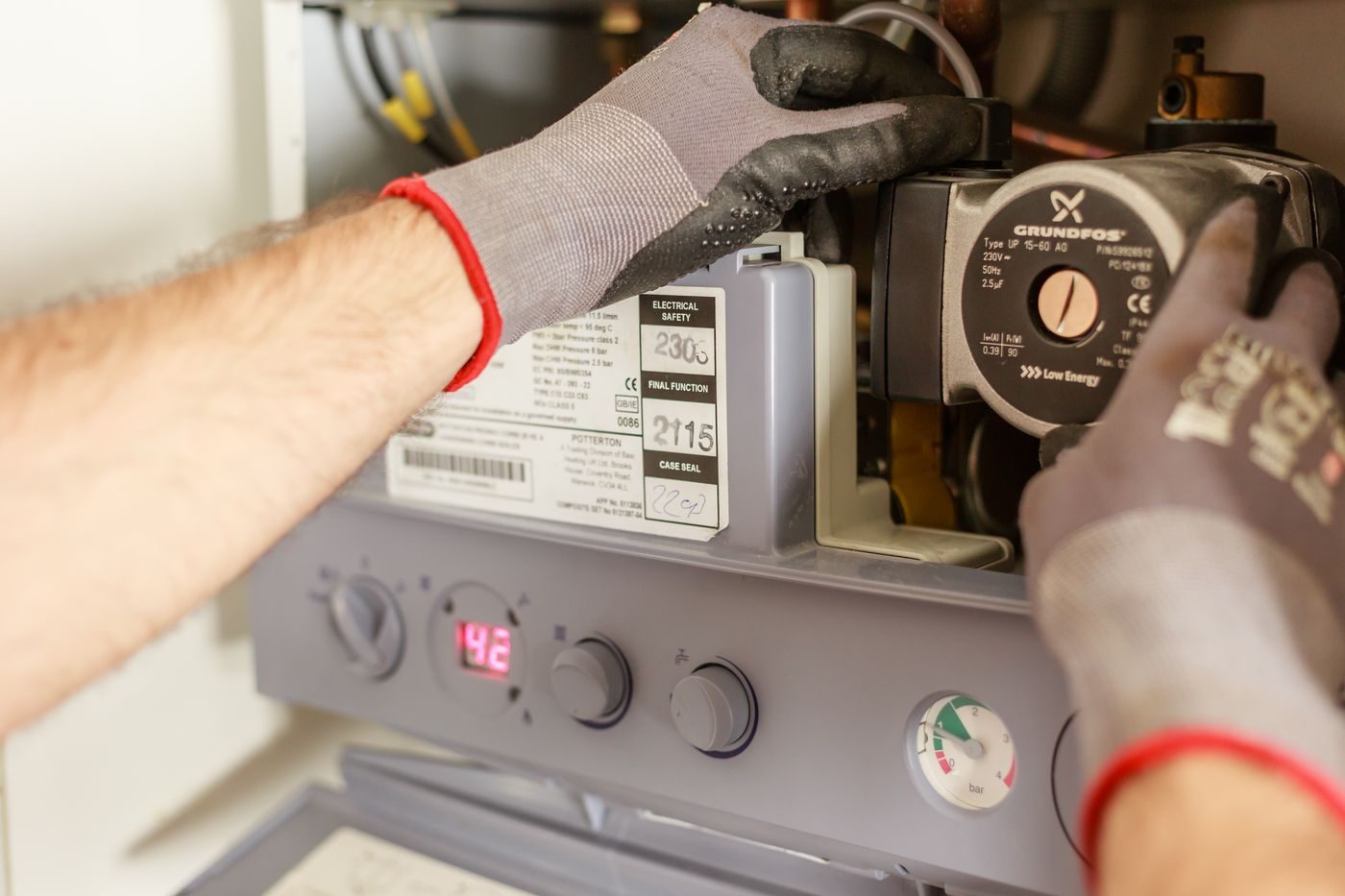
No leak, power confirmed, setting correct, reset done — and still no hot water after a full cycle? Then the likely causes are internal: a failed element, a failed thermostat, or a gas control problem. Those are diagnosis jobs with the covers off, and they are where this checklist honestly ends.
Still Cold in Miami or Fort Lauderdale?
Tell the plumber what you found: whole-house or one fixture, breaker state, pilot or ignition status, the temperature setting, and whether there is any water at the base. That two-minute report can be the difference between a parts-on-the-truck fix and a second trip.
PlumbCove connects South Florida homeowners with independent local plumbing providers for water heater repair and replacement. Request a local pro through our water heater page, or call 786-741-7667. You hire the provider directly — we simply make the connection.
Rather have a pro look at it?
If the checks above point past the safe DIY line, request a local pro for Water Heater Repair & Replacement — or call 786-741-7667. One request, independent local providers, you choose who to hire.